Buy online or call us Free on 0800 48 44 330800 48 44 33

Opening Hours

Mon - Fri 9am to 6pm
Sat 9am to 4:30pm

Parking permit surcharge could force diesel cars off the road

The owners of diesel cars are facing higher charges for their yearly parking permit in major cities because of growing concern over their effect on air quality. Some council’s have already begun to increase the cost for the vehicles which were in the past considered to be more environmentally friendly because of their lower emissions.

A driver with a typical family diesel car will now have to face up to the fact they will be paying over £150 a year to park outside their home. There is growing concern within the Coalition about the green credentials of diesel vehicles, which have been a popular choice over the last 12 months.

According to a report that has been prepared for the Department for Environment, a diesel vehicle emits too many small polluting particles that damage air quality. This is a concern for residents in areas with heavy traffic. The report recommends the encouragement of small, modern petrol vehicles, petrol hybrids and electric vehicles in urban areas and those with a diesel vehicle should change to one of these. At the moment a diesel vehicle accounts for one in four vehicles on the road, and four out of every ten new vehicles are now diesels. Insurance companies are giving a motor insurance quote for an increasing number of diesel vehicles.

The move is likely anger motoring groups as diesel already costs up to 7p a litre more than unleaded petrol. Edmund King, the AA’s president, said “Punishing someone for owning a diesel car that produces up to 20% less CO2 than the petrol version is ludicrous. Councils are plundering residents’ parking for money to balance their budgets.”

Sunshine and fuel prices mean fewer cars on the road

A fortnight ago, rush hour traffic in Bristol city centre was at a standstill because of a single road closure and faulty traffic lights. This familiar sight of clogged roads had Bristol living up to its name as one of the most congested places in the United Kingdom.

However, things have changed dramatically this week as cars and vans moved much more freely around the city and the drop in traffic has been put down to a combination of the increasing fuel prices and the warmer weather Bristol and the surrounding area has been enjoying. Despite having got a motor insurance quote and cover for their vehicle, drivers are starting to use the car only when necessary.

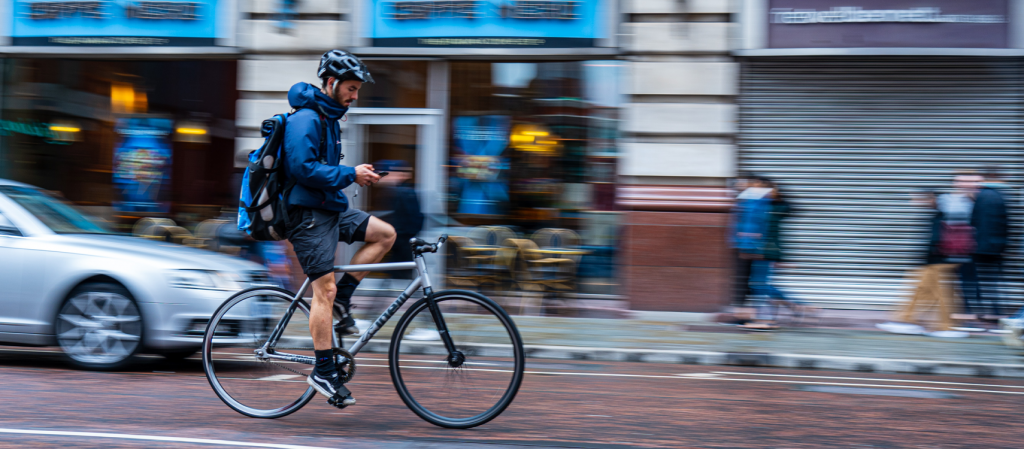
Bristol City Council thinks the spring weather has encouraged many more people to either walk or cycle, which has taken hundreds of vehicles off the roads. Traffic flow statistics showed a drop in the number of vehicles on the roads between March 19 to March 25 compared to the average number.

Pete Wood, spokesman for Bristol City Council, said “Traffic levels are probably somewhat lower, although not very significantly. This could be for a number of reasons. Nice weather often encourages people to leave the car at home and walk or cycle instead. People may also be taking advantage of the weather and taking some time off work.”

There are some seasonal bike riders who start to cycle every spring but this number has increased since last year. More people are also using public transport, and although the bus fares in Bristol are not cheap, passengers are not yet affected by increases in fuel prices as drivers are at the moment. Many more drivers have been cutting back on their mileage and driving at slower speeds in an effort to make their fuel go further.

Drivers to be denied a blood test if stopped on suspicion of drink driving

Drivers who are marginally over the drink drive limit when stopped by the police are going to lose the right to demand a blood test after the biggest changes to the drink drive law in over 40 years comes into place.

The Transport Secretary intends to plug the loophole which enables drivers to sober up while the police try and find a doctor or nurse to carry out the blood test. This is just one of a series of far reaching changes unveiled as part of the coalition’s response to the recommendations on road safety. However, the Government has upset road safety campaigners because a call for the drink drive limit to be cut from 80 milligrams of alcohol per 100 millilitres of blood to only 50 will not be brought in.

Scrapping the right of a driver to demand a blood test is seen as a vital tool in stopping motorists who try and play for extra time in the hope that some of the alcohol will have gone from their bloodstream. The Department for Transport claim that removing the right to demand a blood test will probably lead to 5,000 more drink drive convictions a year. Anyone convicted of drink driving will see an increase in premiums when they next look for a motor insurance quote after serving a driving ban.

The change will mean that a driver will have to take a breath test as soon as they arrive at the police station but this will be tightened even further by introducing machines which will allow breath tests to take place at the roadside. The Coalition also plans to clamp down on drug drivers.

Mr Hammond said “It is just as dangerous to drive impaired by drugs as alcohol so we need to send a clear message that drug drivers are as likely to be caught as drink drivers and that drug driving is as socially unacceptable as drink driving has become. The number of drink driving deaths has fallen by more than 75% since 1979. But drink driving still kills hundreds of people so we need to take tough action against the small minority of drivers who flagrantly ignore the limit.”

Classic toy cars go up for auction

An auction lot of 350 cars will be going on sale later this week and although the new owner will never have to get a motor insurance quote on any of them, he will have to dig deep in his pockets to buy them. These are classic toy cars and they are set to cause auction frenzy later this week.

The cars range from the bright red Ford, detectives Starsky and Hutch drove, the black Cadillac from classic gangster film The Godfather, to American pick ups and vintage Chrysler cars that span many decades of motoring history. They will look lost on a driveway or parked in a garage but they are going under the hammer and anyone who buys them will be the envy of friends, but they will cost an estimated £2,000 to £3,000 to take them away. The stunning die cast models are only a fraction of the real cars’ size, but they do come with the exact same leather seats, windows and windscreen wipers.

The identity of the private collector selling the models is unknown as they do not wish to be named and it is thought they have spent more than two decades building the collection of cars which come from all over the world. Collectors will be drawn to the scaled down versions of cars that have appeared on both television and the big screen in programmes such as Happy Days and many James Bond films. The most expensive car is an unusual Norev 1946 car with a caravan which is expected to be bought for around £80.

Valuer Helen James said “The collector must have been collecting for 20 or 30 years and now he is offering them for sale. We don’t see a collection like this very often. We are hoping it will cause a lot of excitement. Maybe it will give someone the chance to own these wonderful cars, even if in miniature form or maybe someone who already has one of the cars will want the model too.”

Prospect Auction Rooms will be selling the cars in 100 separate lots later this week with the auction starting at 1pm after there has been two hours of viewing.

Shake up will force drivers off streets

Plans have been approved for a major shake up of parking in and around Middleton town centre.

Under the new scheme most of the streets surrounding the Greater Manchester town will now have resident only parking schemes introduced, where residents will be issued with a parking permit. The Rochdale Council run car parks and Middleton Shopping Centre would have a new standard charge for parking introduced which will guarantee parking charges don’t exceed £2. Both Council and residents are hopeful that the new measures will stop commuters parking on residential streets and instead use the vastly under used public car parks in the town.

Councillor Neil Emmott, who is Middleton township chairman, said “Although the overall strategy had been agreed, its detailed elements would only be introduced after talking to affected residents. There are still some issues that need to be discussed with various people in the town who will be affected by the changes. We are aware of the majority of issues but the strategy will give us a starting point to move forward.”

The scheme is part of the town’s new parking strategy, which it is hoped will address all of the issues raised by residents during the last four years. As well as new residents’ parking schemes around the town the car parking fees are going to be changed. The new charges will see a cost of 50p for one hour, rising to £1 for up to four hours and a maximum charge of £2 to park for six or more hours. Residents living on the streets which are changing to restrict parking will be issued with one permanent permit pass and one separate visitor pass.

Residents are relieved that commuters are going to be prevented from parking on their road each day because quite often they cannot park outside their own home and have to park on the main road as commuters often block their driveways. This is a big problem for many residents as they tell their insurance company that their vehicle will be parked on a driveway when getting a motor insurance quote. It has been an ongoing issue for years and the majority of residents will be delighted that drivers who don’t live on the street will now be prevented from parking there. Consultation will now begin with residents and the changes will be brought in during the next few months.

Lower insurance for young drivers a possibility

Any young driver who has a new smartbox installed in their cars will be eligible for an insurance discount of over £300 providing they are sensible on the road.

Under the scheme, which has just launched, drivers who are aged between 17 and 25 will have their motoring skills monitored by a small box which is fitted to their car. They will be rewarded with lower insurance premiums by simply adhering to a number of different criteria set out, which include not driving at so called dangerous times of between 11pm and 6am. The 17 to 25 age group is the hardest hit when getting a motor insurance quote, having seen their premiums increase by 58% to over £2,200 in the past year.

Drivers have been warned that premiums are highly likely to increase even more after the European Court of Justice have ruled that insurers can no longer use gender to set insurance premiums, a rule which will penalise young female drivers.

David Neave, director of General Insurance, said “It is a fact that many young people are simply being priced out of owning a car due to the escalating cost of motor insurance for young drivers. To ensure we do not end up with an entire generation priced out of car ownership we are giving them a chance to prove themselves as responsible drivers, and dispel the assumption that all young drivers will drive badly and have accidents.”

Any driver signing up to the scheme will have information transmitted by the Smartbox back to the insurer’s data systems. But while a good driver will get a discount on future payments, bad drivers will see their insurance costs go up by a maximum of 20% on their initial payment. However, it has been suggested that this new the scheme was very unlikely to attract “boy racing drivers” who do not want the Smartbox fitted to their vehicle.

Driver demands bus stop is moved

A driver who claims his car has been damaged by passing buses on a number of occasions is demanding compensation to cover the costs of repairs. Alistair Rae parks his Mazda outside his home which is very close to a bus stop.

Mr Rae, 62, and the father-in-law of singer Corinne Bailey Rae, claims he has had to remove paint and scratch marks from his car caused by buses from the local bus company passing too close to his vehicle. He is worried that an incident causing significant damage will be done, forcing him to make an insurance claim which would see his next motor insurance quote increase considerably.

Mr Rae said “I park my car outside my house and when the buses leave the bus stop their tail hits my driver’s wing mirror and front of the car. You can see their corporate colours on the side of my car. The firm accepts liability and comes to take pictures every time. I want to be compensated or I will talk to my lawyer. He suggested I move my car, but there is nowhere else.”

He was told to write to the local council asking them to move the bus stop which is close to where he parks his car. Officials have come out and extended the yellow lines slightly which has made no difference. Mr Rae feels it is not the bus shelter or the car’s fault, the problem is the bus drivers, as neither car nor bus belongs to them they do not care.

First Buses in Aberdeen acknowledge the problem and say they are both aware and sorry about the damage to Alistair’s car. They confirmed that all previous damage caused has been repaired very quickly at First Buses own cost and they have previously compensated Mr Rae because of his inconvenience. They do however feel the parking space used is too close to the bus stop which is resulting in the tail gate of the bus clipping his vehicle. They have informed all drivers of this problem but feel the parking space or the bus stop should be moved and they have written to the council and are awaiting a response.

Zero-emission vehicles to get the green light

If predictions are correct, there will be a revolution in the motoring industry in the coming years, as tens of thousands of zero emission electric vehicles are prepared to hit the roads of the United Kingdom.

It has been predicted that slowly over time, the days when a motorist only required a bare slab of tarmac or concrete to park up are ending. In the not too distant future there will be an increasing numbers of drivers who will be demanding curbsides equipped with glowing posts which are capable of recharging a plug-in EV (electric Vehicle).

At the moment electric vehicles account for only a few thousand of the 28.5m cars on the roads, however, both industry and the Coalition Government are taking huge steps to clean up the environment and also boost the UK’s economy. Estimates have been made that we will see tens of thousands of new zero emission vehicles on the roads within the next few years. This year is set to be the biggest year yet for the motor industry as six new EVs are being launched in the UK, and another three hitting the showrooms next year. Insurance firms are expecting a surge in drivers getting a motor insurance quote for an EV.

Inevitably, barriers are still there regarding the adoption of an EV; not least the fact that expensive battery technology means the Leaf and its rivals will set a driver back between £28,000 and £35,000 which is a third more than similar conventional combustion engine vehicle.

Andy Heiron, head of the EV programme at Renault UK, says “Appealing to people’s pockets will be key. There are some people who will buy and run electric vehicles to make a statement, but for the mass market, they have to make financial sense. That’s why we’ve stuck our neck on the block by going for battery lease, i.e. buyers of Renault’s electric cars will pay a monthly rental fee for the battery, which will mean we are on a level with equivalent diesel cars on upfront cost.”

Norfolk businesses struggling with sky high fuel costs

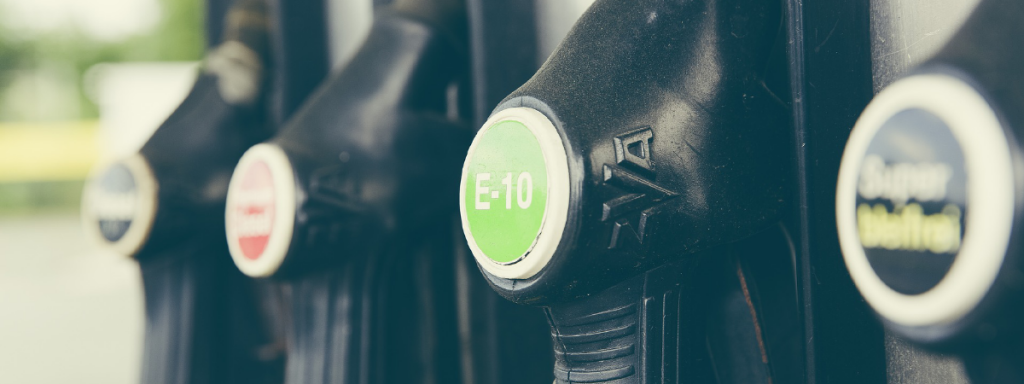
Fuel prices have increased by close to 15% in fewer than 12 months and have now reached a record high, with the average price for a litre of unleaded throughout the United Kingdom now at 130.68p and diesel even more expensive at 136.14p.

Chief Secretary to the Treasury, Danny Alexander, announced yesterday a plan to reduce the duty on fuel by 5p in both island and remote communities. But this is of no help at all to people in Norfolk as the only ones to benefit are those in the Highlands, the Hebrides and Scilly Isles. Mr Alexander claims the discount is to help families who generally pay higher fuel prices because of their outlying locations. But AA president Edmund King feels the fuel duty reductions should be across the board.

In Norwich there are many businesses and organisations who are now really struggling. Driving schools have all reluctantly had to increase the price of lessons because of the price of fuel. They may also have to put an extra charge on learners who live outside the city. A charity who provide affordable transport for over 500 disabled people in the city are already £5,000 over budget on fuel for the last eleven months.

One of the hardest hit areas is the taxi trade. In Norwich taxi drivers have noticed a large drop in customers as the mileage rates go up. The latest increase in fuel prices and the increase in premiums each year on a motor insurance quote has left them with little option but to increase prices but they are suffering for it.

Duncan Snelling, of Jarrett’s Removals and Storage, said “The costs have been detrimental to the business. We work in a very competitive market where the cheapest is chosen. We just can’t put prices up in line with fuel. We have looked into more fuel-efficient vehicles, but that was not cost-effective as an upgrade to each vehicle will cost approximately £4,000.”

End of the line for last of the British cars!

One of the most famous names in UK motor manufacturing seems set to disappear forever, as the current financial situation hits more and more firms throughout the UK.

Bristol Cars, the famous car manufacturer whose motor cars embodied the stereotypical British standards of excellence without ostentation, look to be finally disappearing from the scene as administrators have been called in. The news will come as a blow to recent purchasers of the famous marque such as Bono and Richard Branson.

The company is the last motor manufacturer completely in British ownership, and although the administrators are hopeful the business can be saved, it is understood that 22 of the 27 work force have already been made redundant. The factory in Bristol was down to making just 20 new cars a year which were sold through its one showroom in London. In its heyday the company produced 200 vehicles a year and customers were quite happy to join the 18 month waiting list just to ensure they got ownership of a “Gentleman’s Express”.

The cars were not cheap either. The Bristol Fighter and the Bristol Blenheim were completely hand crafted vehicles and a motor insurance quote on cars that cost between £150,000 and £250,000 can only be guessed at by those of us who plod around in more mundane vehicles. It was said that when in the hands of Tony Crook the company vetted all potential purchasers to ensure they were of the right stock to own a Bristol!

The current owner of the company, Tony Silverton, said “It has not been possible for the company to continue to trade in its present structure. While the decision has been taken regretfully, I am confident that a future for the business will be found.”